
European wasps often raise urgent questions — especially when they start appearing around homes, outdoor areas and workplaces. Below are clear answers to the most common questions Australians ask about European wasps, their behaviour and what to do if you encounter them.
Can European Wasps Sting More Than Once?
Yes. European wasps can sting repeatedly. Unlike bees, they do not die after stinging, which is why they are particularly dangerous when a nest is disturbed or someone is attacked by multiple wasps.
What Should I Do If I’m Stung by a European Wasp?
A European wasp sting usually causes immediate pain, redness and swelling. Applying a cold pack can help reduce discomfort. If symptoms worsen or include difficulty breathing, swelling of the face or throat, dizziness or if someone has been stung more than five times, call 000 immediately.
For advice, contact the Poisons Information Centre can be contacted on 131 126.
How Do I Know If I Have a European Wasp Nest?
A common sign is repeated wasp activity in the same area, especially wasps entering and exiting a single point. You may also notice a consistent flight path. Professional inspection is the safest way to confirm nest location.
What Time of Day Are European Wasps Most Active?
European wasps are most active during warm daylight hours, particularly from late morning through the afternoon. Professional treatments are often scheduled early in the morning or evening when activity levels are lower.
Will European Wasps Return After Nest Removal?
Once a nest is professionally destroyed, that specific colony will not return. However, new queens may establish nests in future seasons, which is why preventative measures are important.
Are European Wasps Protected in Australia?
No. European wasps are classified as an invasive pest species in Australia and are actively targeted for control due to the risk they pose to people, pets and native ecosystems.
Can European Wasps Damage My Property?
European wasps do not damage structures in the same way termites do, but nests in wall cavities or roof spaces can cause secondary issues. Their presence can also make outdoor areas unsafe and unusable.
How Far Do European Wasps Travel from Their Nest?
European wasps can forage up to 500 metres from their nest. This means the nest affecting your property may be located on a neighbouring property, making professional identification important.
What’s the Difference Between European Wasps and Paper Wasps?
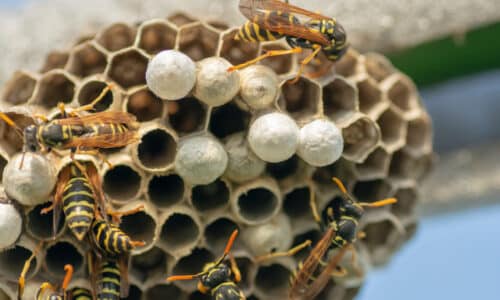
European wasps are aggressive, yellow and black, nest in cavities and can sting repeatedly. Native paper wasps are generally less aggressive, build exposed papery nests and play a beneficial role by preying on other pests.
How Long Does European Wasp Treatment Take?
Most single-nest treatments take between 30 and 60 minutes. Larger infestations or multiple nests may require follow-up visits.
Is Professional Treatment Safe for Pets and Children?
Professional treatments are targeted and applied carefully to minimise exposure. Clear safety instructions are provided, and treated areas are made safe before access is restored.
What Should I Do If Someone Has an Allergic Reaction?
If someone shows signs of anaphylaxis — such as difficulty breathing, swelling of the face or throat, or collapse — call 000 immediately. People with known allergies should carry prescribed emergency medication during wasp season.
Where European Wasps Are Found in Australia
European wasps are now firmly established across southern regions of Australia, including:
- Western Australia – Perth and surrounding regions
- South Australia – Adelaide and across the state
- Victoria – Widespread throughout the state including Melbourne, Geelong, Port Fairy, Mornington Peninsula, Dandenong, Ballerat
- Tasmania – Established across the state
- Southern New South Wales – Sydney, South Coast and southern regions
- Australian Capital Territory – Canberra, Quenbeyan, Belconnen, Gungahlin and surrounding areas
If you live in any of these areas, European wasps are a real and present threat, particularly during January to March.
Need Help With European Wasps?
If you’re unsure which species you’re dealing with or suspect a European wasp nest, professional identification and treatment ensure the problem is handled safely and effectively.
Call now or book online for professional European wasp removal.
Enjoyed this article?
If you found this article helpful, sign up for our free Quarterly Newsletter to receive all our tips and tricks on pest control and washroom hygiene.
Sign Me Up!