
Australia boasts of having some of the world’s most venomous spiders. While many are harmless, a select few can pose serious risks. Understanding how to identify them, where they live, what the danger is, and what first aid to apply is essential for staying safe.
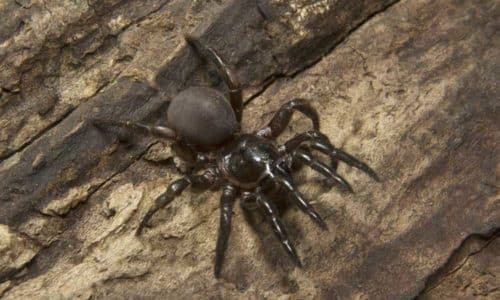
5. Trapdoor Spider (Family Idiopidae)
- Identification: Medium‑sized (1.5‑3 cm body), dark brown, sturdy legs.
- Habitat: Silk‑lined burrows hidden under garden soil, forest floors or sandy ground.
- Risk: Bites are rarely life‑threatening but may cause pain, nausea and lethargy when provoked.
- First Aid: Clean the bite with soap and water; monitor for allergic reaction; seek medical advice if symptoms worsen.
Trapdoor spiders are burrowing arachnids often overlooked because of their secretive homes, but they’re fascinating and sometimes startling if uncovered. These medium‑sized spiders (1.5–3 cm body length) construct silk‑lined burrows with camouflaged entrances in gardens, lawns and bushland across eastern and southern Australia.
They rarely bite and are generally non‑aggressive, yet their large fangs mean a startled encounter can result in a painful reaction. When a bite occurs, it may cause local pain, swelling and temporary symptoms but is not normally life‑threatening. Treatment involves cleaning the bite site and monitoring for allergic response. These spiders remind us of the hidden wildlife beneath our feet and the importance of caution when digging or moving rocks.
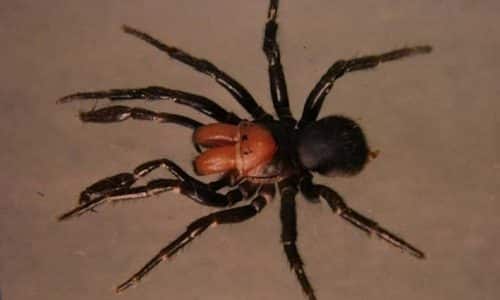
4. Mouse Spider (Genus Missulena)
- Identification: Stocky, shiny black or dark brown body; some have red/orange head region.
- Habitat: Burrows with trapdoor style entrance, commonly near waterways.
- Risk: Venom can be highly toxic, though deaths are unrecorded, serious reactions have occurred.
- First Aid: Use a pressure‑immobilisation bandage and seek immediate medical advice.
Often mistaken for the more infamous funnel web, the mouse spider is a robust burrowing species found across mainland Australia. It features a stocky black or dark brown body, sometimes with bright red or orange jaws in males. Their deep burrows with trapdoor‑style entrances lie in open forest or semi‑arid shrubland, and they may emerge at night to hunt or wander. Although bites are uncommon, some species’ venom rivals that of funnel‑webs in toxicity. In the event of a suspected bite, a pressure‑immobilisation bandage should be applied and immediate medical care sought. Because they are less common in urban homes, awareness is lower, so staying vigilant when in bush or rural settings is vital.
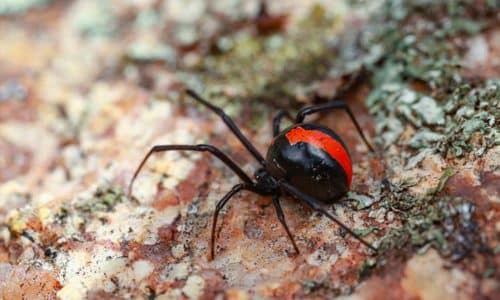
3. Redback Spider (Latrodectus hasselti)
- Identification: Female about 1 cm long, glossy black with a bold red stripe; males much smaller and less risky.
- Habitat: Found throughout Australia, especially in sheds, outdoor furniture and gardens.
- Risk: Venom causes intense local pain & systemic symptoms; fatalities rare due to effective antivenom.
- First Aid: Keep the patient calm, limit movement of the bite area, and seek medical help. Do not apply a tight tourniquet.
The ubiquitous redback is easily recognised and frequently encountered, making it one of Australia’s most medically significant spiders. The female redback has a glossy black body with a bold red stripe or hourglass marking on the back; the male is significantly smaller and less venomous. These spiders thrive around human habitation; sheds, outdoor furniture, garden junk, lots of quiet dark corners. Its venom causes pain, sweating, nausea and muscle weakness, and while antivenom is available and fatalities rare, bites should always be treated seriously. For bite management, immobilise the limb, stay calm and seek medical attention and avoid tight tourniquets, which may worsen symptoms.
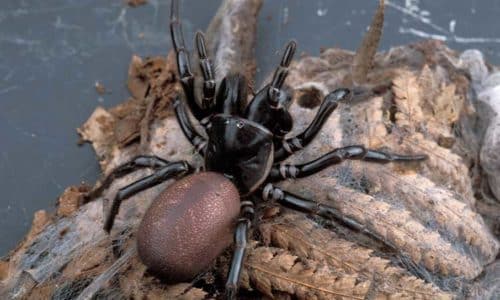
2. Funnel‑Web Spiders (Genera Atrax & Hadronyche)
- Identification: Glossy black or dark brown body, large fangs, spiny legs; about 40 species exist, but only a handful are critically dangerous.
- Habitat: Moist sheltered ground habitats; forest floors, gardens, often hidden in suburban yards.
- Risk: Bites can cause life‑threatening effects (muscle spasms, breathing difficulty).
- First Aid: Immediate pressure‑immobilisation bandage and urgent medical attention required.
Funnel‑web spiders form a group of around 40 species in Australia, though only a handful are critically dangerous. These glossy black or dark brown spiders often grow 1–5 cm in body length and bear formidable fangs, burrowing in moist, sheltered ground like forest floors, rock crevices or garden mulch. The male Sydney funnel‑web (Atrax robustus) is known as Australia’s most lethal spider, the venom can cause muscle spasms, breathing difficulties and other urgent systemic symptoms. However, no fatalities have been recorded since the anti‑venom program began in 1981. First aid demands immediate pressure‑immobilisation bandaging and urgent medical attention; this is not a scenario for DIY treatment. Because they can wander into homes, especially during warm months, keeping doors and sheds sealed and checking equipment or garden items is essential.
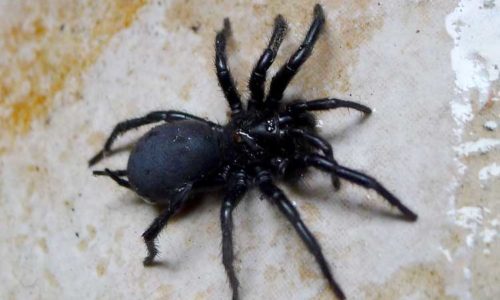
1. Sydney Funnel‑Web Spider (Atrax robustus)
- Identification: Up to 5 cm body size, shiny black, fearsome fangs.
- Habitat: Primarily NSW, suburban gardens, sheltered and moist locations.
- Risk: Historically caused human deaths; since development of antivenom in the 1980s, no recorded deaths.
- First Aid: Apply pressure‑immobilisation bandage immediately and call emergency services.
At the top of Australia’s danger list is the Sydney funnel‑web, a spider that has captured public attention since the 1980s. These spiders have shiny black or blue‑black bodies, prominent fangs and may grow up to 5 cm in length. Their preferred habitat is in New South Wales, especially around moist, sheltered yards, garden mulch, and building foundations. Aggressive when threatened, the male’s venom is the most medically significant of any Australian spider. While antivenom has effectively eliminated fatalities, the risk remains and prompt action is essential. For bites: apply a pressure‑immobilisation bandage and call emergency services immediately.
First Aid for Spider Bites
- Stay calm and keep the bite site as still as possible.
- Clean the bite with soap and water.
- Apply a pressure‑immobilisation bandage for funnel‑web and mouse spider bites.
- Seek medical help for any spider bite, even if initial symptoms look mild.
How to Prevent Spider Encounters at Home
- Inspect and maintain your yard: Remove clutter, wood piles and debris that offer hiding spots.
- Seal entry points: Gaps around walls, doors and windows let spiders in.
- Keep your home tidy: Vacuum and dust regularly to reduce insect prey and deter spiders.
- Call a professional: A pest‑control expert can inspect your property and install exclusion treatments to keep spiders out.
Flick Pest Control: Your Partner in Spider Management
If you’re worried about spider infestations, Flick Pest Control offers expert inspection, identification and treatment solutions. From preventive programs to targeted treatment and follow‑up, we help keep you and your family safe. Contact us today to schedule your inspection and enjoy peace of mind.
Enjoyed this article?
If you found this article helpful, sign up for our free Quarterly Newsletter to receive all our tips and tricks on pest control and washroom hygiene.
Sign Me Up!